
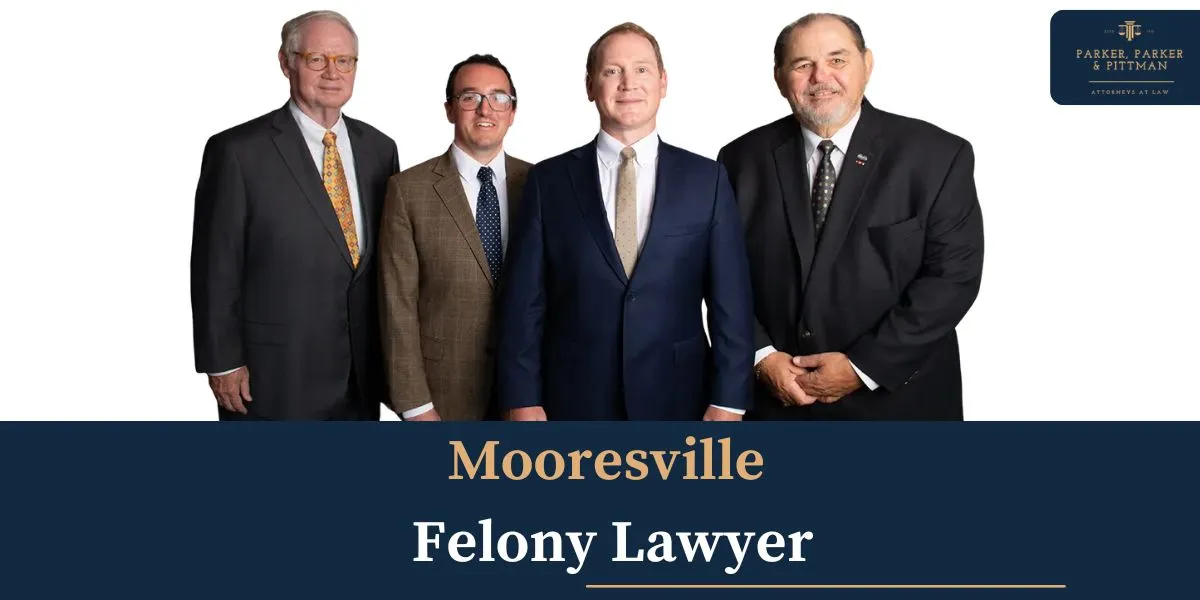
Felony Attorney in Mooresville, NC
Being charged with any crime can have a serious negative effect on a person’s life. However, felony charges are some of the most serious. The consequences of a felony conviction can follow a person forever, affecting job opportunities, housing, personal relationships, and more. If you are facing felony charges in the Mooresville area, you could benefit from the counsel of a Mooresville felony lawyer.
Choose Parker, Parker & Pittman for Your Felony Case
At Parker, Parker & Pittman, our attorneys have over 100 years of combined legal experience, including litigation. This depth of knowledge allows us to provide clients with strategic and results-driven representation. We approach all felony cases with a clear understanding of effective defense strategies, North Carolina criminal law, and court procedures at the Iredell County Superior Court. We advocate aggressively to protect each client’s rights and futures.
What Constitutes a Felony in Mooresville, North Carolina?
Criminal offenses are broadly classified as either misdemeanors or felonies. A felony is a crime that is punishable by more than one year in prison. It is generally a serious charge and fairly common in North Carolina. In fiscal year 2024, about 27,088 people were sentenced for felony crimes in North Carolina.
Although some crimes are felonies at the federal level, each state has the authority to classify offenses as felonies or otherwise. States also have unique systems for subclassifying felonies based on severity and imposing certain sentences for each felony type.
In North Carolina, felonies are classified alphabetically from A to I, with Class A felonies being the most serious and Class I felonies being the least serious. Some examples of felonies in each classification are as follows:
- Class A. Class A felonies include first-degree murder and use of weapons of mass destruction, among a few other things. In fiscal year 2024, 16% of felony sentences in North Carolina were for Class A offenses, according to the NC Structured Sentencing Statistical Report.
- Class B. Class B is divided into subcategories B1 and B2. Class B1 felonies include rape and incest. Class B2 felonies include child abuse and voluntary manslaughter.
- Class C. Rape in the second degree and kidnapping are two examples of Class C felonies.
- Class D. Class D felonies include offenses like armed robbery or vehicular manslaughter, depending on the circumstances of the incident.
- Class E. Offenses like assault of a police officer or selling illegal drugs in certain locations, like within a certain distance of a school, can result in a Class E felony charge.
- Class F. Crimes like involuntary manslaughter and some instances of sexual assault are Class F felonies.
- Class G. Class G felonies include felony burglary and felony gun possession.
- Class H. Forgery, possession of stolen property, and larceny are considered Class H felonies.
- Class I. Class I felonies are nonviolent crimes that are often related to drug use.
Some offenses, like assault, can be felonious or non-felonious and can be a higher or lower class of felony depending on the circumstances of the incident and the offender’s prior criminal record
Sentencing for Felonies in North Carolina
In North Carolina, felonies are punished using a structured sentencing system. This system uses a sentence chart that relies on intersections between the class of felony in question and the prior criminal record of the offender to determine minimum and maximum sentencing ranges.
The sentencing structure also takes into account aggravating and mitigating factors. Aggravating factors may include things like the age of the victim at the time or the severity of violence, if violence is involved. Mitigating factors may include things like the age of the offender or any psychological distress or duress under which the offender acted.
Class A felonies carry a mandatory minimum sentence of life in prison. If the offender was over the age of 18 at the time of the crime, the mandatory minimum sentence is life in prison without the possibility of parole. If the offender was a minor at the time of the offense, a judge may instead impose the sentence of life in prison with the possibility of parole. For first-degree murder, prosecutors may seek the death penalty.
Hire a Felony Lawyer in Mooresville
If you find yourself facing felony charges, the first thing you should do is hire a felony lawyer in the Mooresville area. An attorney from our firm can help you understand the charges against you and their potential consequences. With a lawyer, you can review every detail of your case and build a strong defense to present in court. The help of an experienced attorney can be the difference between a life-altering conviction and a bump in the road.
FAQs
Can a Felon Own a Firearm in Mooresville?
No, a convicted felon cannot own a firearm in Mooresville. Furthermore, a person convicted of a felony cannot live in a place where there are firearms, even if the guns do not belong to them. If a felon is found to be in possession of a firearm, that can result in another felony charge
What Is the Difference Between Murder and Manslaughter in North Carolina?
The difference between murder and manslaughter comes down to intent and planning. Murder is the intentional, planned killing of another person. Manslaughter is the killing of another person without premeditation or malice. Often, manslaughter is committed by a person experiencing extreme rage or in an altered mental state, whereas murder is committed in a state of mental clarity.
Is Domestic Violence a Felony in North Carolina?
Domestic violence offenses can be classified as felonies in North Carolina, depending on the circumstances of the offense. If the violence involved intent to seriously harm or kill the victim, or if it involved assault with a deadly weapon, it may result in a felony charge. Domestic violence may also be charged as a felony if the offender was previously convicted of domestic violence
Is Drug Possession an Automatic Felony in North Carolina?
No, most of the time, drug possession is not an automatic felony in North Carolina. In fact, most simple possession situations are misdemeanors, not felonies. Drug possession can result in felony charges if there are prior convictions or if the amount of the substance in question leads to trafficking or intent to distribute charges.
Contact Parker, Parker & Pittman Today
Felony charges can turn your life upside down. If you are facing a potential felony conviction, you may feel stressed, anxious, and unsure of the future. At Parker, Parker & Pittman, we see our clients as people, not statistics. We can help you navigate the unknown with empathy, understanding, and the personalized support you deserve. Contact our team today for a consultation to discuss your case.